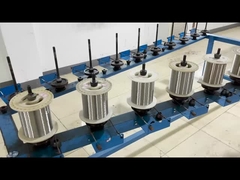
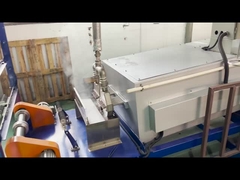
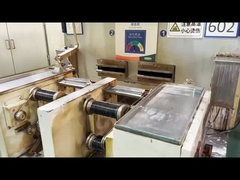
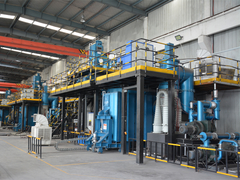
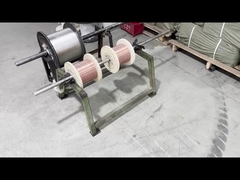
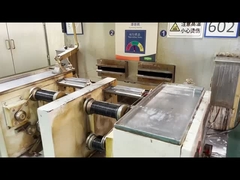
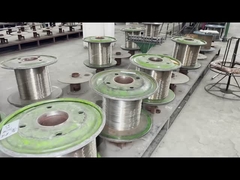
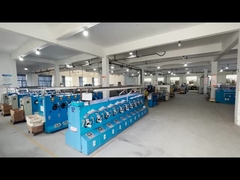
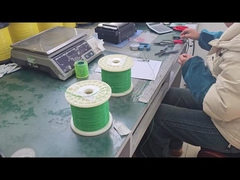
The Birth of an Alloy Wire

Other Videos
May 23, 2025
Category Connection: Hastelloy Alloy
Brief: Discover the exceptional properties of Hastelloy B-3/2.4600/N 10675, a nickel-molybdenum alloy designed for demanding industries. This video explores its superior resistance to hydrochloric acid, improved thermal stability, and enhanced fabricability in various forms like bars, rods, wires, and plates.
Related Product Features:
  • Hastelloy B-3 offers outstanding resistance to hydrochloric acid at all concentrations and temperatures.
  • Improved thermal stability and fabricability compared to earlier B-series alloys like Hastelloy B-2.
  • Excellent performance in sulfuric, acetic, formic, and phosphoric acids.
  • Resists pitting corrosion, crevice corrosion, and stress corrosion cracking in reducing media.
  • Available in multiple forms including bar, rod, wire, forging, plate, and strip.
  • Greater structural stability in welded conditions with less tendency to form deleterious phases.
  • Ideal for chemical processing industry applications like reactors, heat exchangers, and piping systems.
  • Not recommended for use in oxidizing environments due to limited resistance.
Faqs:
  • What makes Hastelloy B-3 superior to Hastelloy B-2?
    Hastelloy B-3 offers improved thermal stability, better fabricability, and enhanced resistance to stress cracking and knife-line attack in welded conditions compared to Hastelloy B-2.
  • In which industries is Hastelloy B-3 commonly used?
    Hastelloy B-3 is widely used in the chemical processing industry for applications like reactors, heat exchangers, and piping systems due to its resistance to aggressive reducing media.
  • What are the limitations of Hastelloy B-3?
    Hastelloy B-3 is not recommended for use in oxidizing environments as it has limited resistance in such conditions.